
How Writing is Like Teaching

I was a teacher, now I’m a writer. There are crossovers between the two.
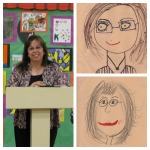
I was reflecting the other day about the novelty of writing and how it intersects with teaching and speaking. I am a teacher. I am a writer. I am a speaker. There is major overlap in these roles and how they function. Those who write have a message to send out. Likewise, teachers are in the business of educating or they’re out of a job. The person who speaks must have something to say or the audience loses their focus and they won’t be invited back for another go round.  Each is a communicator of a message.

As a reader, I recently read the book Unbroken. I was confronted with many human emotions; those of courage, bravery, endurance, compassion, hatred, evil, fear, suffering, love, hope, and forgiveness. Louis Zamperini resonates with us. The story is more than just a page turner. It speaks. It shows. It teaches. It is a story with a powerful message.  .  . and we get it.

As an educator, my favorite years were those I spent as a reading specialist. I taught reading and language arts interventions to students performing below grade level. The goal was to bring their skills up and closer to grade level. My first key step with any new group was to engage their interest. Buy-in matters. A lot. A teacher learns to create a learning environment that has a strong ‘cause and effect’ component. There should be measurable learning. Growth. Performance. Success. Achievement.

As a communicator of the written word, my role as a writer has many of the same elements. I want my readers to engage and to become interactive in the conversation. I want them to wrestle with my statements and even argue with them but to think and consider and draw conclusions. It is essential that I create an environment which stimulates interest and then formulates an opinion until the message is understandable and considered, received or embraced. To do this, I must be wise in my choice of words and incremental in their delivery.

As a teacher, we have lesson plans with clear objectives. The job requires concise methods, skilled preparation, and effective pedagogy. Before a teacher takes center stage in the classroom, they must have a lesson objective with a concrete instructional plan and a predetermined process they will use in order to meet the instructional objectives. A savvy teacher will incorporate many tools to enhance and clarify their lesson: books, visuals, audio, illustrations, physical activity, interactive action, and technology. In an incremental sequence, the academic component of instruction is developed by building upon students’ prior knowledge and expanding their capacity for learning the material. A frequent ‘check for understanding’ gives feedback to the teacher as to whether it’s happening or not.

As a writer, a similar task is set before us. Like the teacher or speaker, the writer will need to set up the case in accordance with their objective. They will predetermine what they want their readers to take away from the writing or book. An effective writer knows where they’re heading and then they employ language in a way that will bring the reader along with them. It is critical for the writing to be compelling.  It should grab the reader’s attention whether it’s the first line of an essay or a single page in a book. A writer may have five pages or four hundred pages to make their point before coming to the end where everything ties together. In teaching, we call it closure. That’s the job to do and to do well.

Writing and speaking are forms of teaching. That is why one can flip-flop between them. Here’s a bare-bones comparison.

TEACHING

  1. Set it up: Lesson to be learned/concept
  2. Teach it: What/why/when/how
  3. Add in: Key concepts/academic language–practice and use
  4. Sequence: Lessons/assessments
  5. Closure: Concept acquired/academic attainment
  6. Take away: Academic growth/knowledge gained

WRITING 

  1. Set it up: Problem to be solved or overcome/subject
  2. Develop it: Who/what/where/how
  3. Add in: Setting/characters/timeline/conflict/dynamics–tease and tension
  4. Sequence: Plot development/chapters/concepts
  5. The End: Problem solved/conclusion
  6. Take away: Perspective/growth/useful information

In a similar way, a presenter or speaker follows an effective communication strategy. A hook gets the audience’s attention. The speaker presents an argument for the listeners to consider. The presentation will include support for their thesis with complimentary material that lists why it is true and important. At the conclusion, a speaker will restate the argument while leaving the listeners with something to take away, to use and apply in their life. It’s all about communicating well. The speaker knows where they’re heading–what they want the audience to consider–before the presentation is delivered. It’s an opportunity to teach and to inform.

Realizing where you’re headed and why is common sense. This makes me think of one of my dad’s sayings. Dad says that farming is pretty simple. There are three things you need to know. . . .

You need to know what to do.  You need to know how to do it. And you need to know when to do it.

Pretty much sums it up.

A Kingly-Sized Mess-Up

BE WARY OF PRIDE’S HOOK: Even a king can mess up. We’re all vulnerable. Notice the signposts.

Kings or paupers, it doesn’t matter. Some enter the danger zone willfully, some by forgetting, and others by letting their gaze drift to the wrong things. Such was the case for King Hezekiah. He started strong by following God’s ways and choosing to do what was right. Then the bottom dropped out.

Illness hit hard. The end was near. Bitterness assailed him. He wanted to live out his life. Dying in middle age didn’t seem fair to him; after all, he had served the Lord and sought to bring the nation back to the ways of God. Hezekiah reminded God that he had been faithful to Him. God listened to Hezekiah’s plea and then responded by granting him more years. His wealth increased. Then he showed off what God had given him. God was not pleased.

When we stray from God’s will in our lives, we invite trouble to come visiting. When things are going well, we may become braggarts, arrogant or overly self-satisfied with our lives. It can become “our” ministry instead of God’s ministry. It’s a subtle change, going from clear to murky waters.

Initially, King Hezekiah followed the Lord.  “He did what was right in the eyes of the Lord.” The opposite of many of the kings who “Did what was evil in the eyes of the Lord. ” He chose to do the hard things that went against cultural mores of the day by destroying the high places, the Asherah pole, and the Snake-on-a-pole (from Moses’ day) to which the people gave offerings. He was determined to be faithful to God and centered on pleasing God.

Hezekiah opened himself up to pride after God extended his life. He’d passed the test. That must have felt good. He felt God’s pleasure. The sickness of pride was making headway into his life. He shared what was not to be shared, showed off what was to be held in honor by God’s people and failed to remain humble before his God .

There is a warning sounded in this story. I do not believe King Hezekiah realized that what he was doing was wrong when he showed off the grandeur and splendor of the holy things and kingly treasures. I say this because he seems surprised when confronted about his error.  Apparently he had changed his focus. There was an attitude shift. He had become more self-focused and less God-focused. In reality, the storehouse was filled with God’s treasure, not his treasure.

I can see how easy it would be to do that very thing. Our attitudes can easily shift. We may not realize that we’re drifting away from giving God the glory and His due. It doesn’t take much to become full of self and wanting to show off the greatness of it all.  We can take credit for that which is God-given. We can get sloppy in our way of thinking. We can stop honoring what God calls us to honor.

God has given each of us many gifts. We must use them wisely and for His glory. Give credit to God for the gifts you have in your life. This pleases God. Be wary of self-satisfied self-importance. All we have and possess has been given to us. We are most fortunate to be children of the King.

Reference –

2 Kings 20 (NIV)

20 In those days Hezekiah became ill and was at the point of death. The prophet Isaiah son of Amoz went to him and said, “This is what the Lord says: Put your house in order, because you are going to die; you will not recover.”

Hezekiah turned his face to the wall and prayed to the Lord, “Remember, Lord, how I have walked before you faithfully and with wholehearted devotion and have done what is good in your eyes.” And Hezekiah wept bitterly.

Before Isaiah had left the middle court, the word of the Lord came to him: “Go back and tell Hezekiah, the ruler of my people, ‘This is what the Lord, the God of your father David, says: I have heard your prayer and seen your tears; I will heal you. On the third day from now you will go up to the temple of the Lord. I will add fifteen years to your life. And I will deliver you and this city from the hand of the king of Assyria. I will defend this city for my sake and for the sake of my servant David.’”

Then Isaiah said, “Prepare a poultice of figs.” They did so and applied it to the boil, and he recovered.

Hezekiah had asked Isaiah, “What will be the sign that the Lord will heal me and that I will go up to the temple of the Lord on the third day from now?”

Isaiah answered, “This is the Lord’s sign to you that the Lord will do what he has promised: Shall the shadow go forward ten steps, or shall it go back ten steps?”

10 “It is a simple matter for the shadow to go forward ten steps,” said Hezekiah. “Rather, have it go back ten steps.”

11 Then the prophet Isaiah called on the Lord, and the Lord made the shadow go back the ten steps it had gone down on the stairway of Ahaz.

12 At that time Marduk-Baladan son of Baladan king of Babylon sent Hezekiah letters and a gift, because he had heard of Hezekiah’s illness. 13 Hezekiah received the envoys and showed them all that was in his storehouses—the silver, the gold, the spices and the fine olive oil—his armory and everything found among his treasures. There was nothing in his palace or in all his kingdom that Hezekiah did not show them.

14 Then Isaiah the prophet went to King Hezekiah and asked, “What did those men say, and where did they come from?”

“From a distant land,” Hezekiah replied. “They came from Babylon.”

15 The prophet asked, “What did they see in your palace?”

“They saw everything in my palace,” Hezekiah said. “There is nothing among my treasures that I did not show them.”

16 Then Isaiah said to Hezekiah, “Hear the word of the Lord: 17 The time will surely come when everything in your palace, and all that your predecessors have stored up until this day, will be carried off to Babylon. Nothing will be left, says the Lord. 18 And some of your descendants, your own flesh and blood who will be born to you, will be taken away, and they will become eunuchs in the palace of the king of Babylon.”

19 “The word of the Lord you have spoken is good,” Hezekiah replied. For he thought, “Will there not be peace and security in my lifetime?”

20 As for the other events of Hezekiah’s reign, all his achievements and how he made the pool and the tunnel by which he brought water into the city, are they not written in the book of the annals of the kings of Judah? 21 Hezekiah rested with his ancestors. And Manasseh his son succeeded him as king.

~based on a journal writing