
Your Own Unique Story

We each have our own story, no two are alike.

How God works in your life is different than how He works in mine.

Expecting cookie cutter Christians is not the way it works nor should we expect exact replicas in others of the way we think it should ‘look like.’

We should not become an exact carbon copy of our favorite teacher or preacher. We should be followers of Christ as in The Way.

Allow people freedom to grow uniquely into the person God means for them to become.

This takes the religious conformity issue and makes it into an in-and-through-Christ issue.

You have your own story.

Remember Aslan in The Chronicles of Narnia?

He said something like this, ‘I am telling you your story, not theirs. I tell no one any story but his own.’

It’s best not to compare yourself to others.

Your story has unique-to-you parts.

And that is how it should be.

blog cookies 2

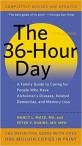
The 36-Hour Day: A Family Guide to Caring for People Who Have Alzheimer Disease, Related Dementias, and Memory Loss (A Johns Hopkins Press , 1981, 2011-5th edition)

Dealing with the effects of Alzheimer disease or related symptoms on a daily basis is exhausting. Caregiving for a person suffering with some form of dementia can be overwhelming. It is a help to the caregiver to know what to expect and how to address it during the time of transition as their family member settles into declining health. Knowing how to deal with the challenging issues as a loved one sinks into serious mental decline can be like a lifesaver in a drowning sea of angst and uncertainty. I’ve watched it from afar and also have some up close observations of families, usually adult children, seeking to cope in a good fashion with the many effects caused by fading memories, Alzheimer’s or dementia in their loved one. It starts with the little things; not remembering the name of something or someone, confusion, angry outbursts. In time, the family member is no longer the person they used to be. They may become angry and upset with no provocation. They may have ever increasing physical limitations. They may be confused as to who you are and suspicious of your intentions. They may no longer be able to articulate their needs nor able to advocate for themselves. What the caregiver needs–besides respite–are some tools, support, and information. That is what this book is about. The 36-Hour Day is a resource and guide written to help the caregiver understand their loved one–who is losing the person they used to be–as they slip away from them. This book is informative and practical for anyone who has an aging parent or relative who may need assistance in the future or is already in that place. It is a book that will provide support and encouragement for the caregiver who cares. It is worth the read.