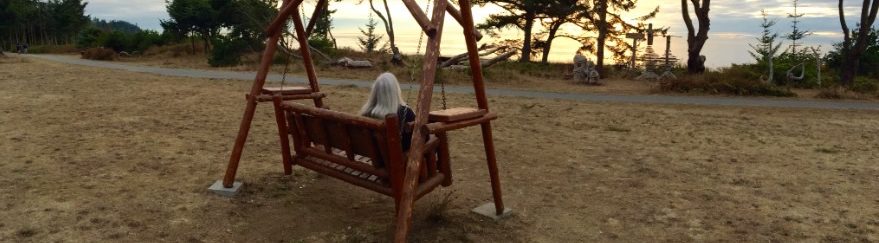

Some of you know that I’ve been writing a book that has a monastic flavor to it. I spent a year making weekly visits to a Trappist monastery, the Abbey of New Clairvaux in Vina, California. While there, I would write my observances and then blend them with personal viewpoint, philosophical insights, and spiritual understanding and also highlight some of the events in the world scene. I’m completing a careful edit of the manuscript right now. I haven’t settled on a title that is to my liking, I refer to it as The Golden Silence. Here is a section “lifted” from its Introduction. I’ll be curious as to what you think. Leave a comment, por favor.
INTRODUCTION:
“God has a way of showing us what he wants us to see and learn. Prior to my year of weekly visits to the monastery, an emerging change of viewpoint was taking place within my spiritual life. It was a six year process of seeking God through a wide range of sacred readings outside my comfort zone. Looking back, I realize God had to break down some long-standing barriers of isolationist thinking to show me that my understanding of the church was too narrow and scripted, and more people are of the faith than I formerly had believed and also some who think they are solid in their faith probably are not.
Human nature likes boundaries, rules, and regulations. We find people who think and act like us. We cling to them and dismiss those who do not agree with us. There can be error in this. I believe God wanted me to know that his church includes many Catholic brothers and sisters and others of the liturgical community. You may wonder how God did this. How did he get my attention? What made me think outside the box of comfortable religious convention and how did I come to this radical, though not new, realization?
It started with a friendship. Several years ago I was invited to join a close friend for church services at an Anglican church in my home town. Out of respect for my close friend, I decided to attend but with some inner reservation. My first visit to an Anglican service was on Christmas Eve. Others visits were soon to follow. These visits exposed me to liturgical worship, which was totally foreign to me. The way the Anglicans worshipped caused an unease in me because of their forms, interpretations and observances. Yet I found myself drawn to certain aspects of their liturgy, and I found it to be beautiful as well. The quiet peacefulness of their worshipful observance was appealing to me and also the reverence and respect with which they treated holy things.
But. But there were areas of belief in which the Anglicans differed from my pronounced Protestant Evangelical Baptist belief system. As a very honest person, I felt untrue to myself and to my beliefs when I was at the Anglican services. I couldn’t, or, quite possibly, wouldn’t, let myself “go there” in my heart-belief. The resistance within me stemmed from a belief that they were “wrong” and off-base, unscriptural, and I was “right,” correct theologically in my biblical understandings of scripture.
It was hard to navigate with such strong feelings warring within me, but I was drawn to the areas of shared sameness as well. I could tell we shared a love of the Lord and a real desire to share our faith with others who do not have faith in Jesus Christ.
As time went on, to help myself become more welcoming of God’s presence in the liturgical setting, I began to ask God to help me worship whenever I was in attendance. Because, by nature of my firmly-held beliefs, I found myself somewhat put-off when, infrequent though it were, I was in attendance at the Anglican services. I eventually chose to not over-think the situation. My respect and affection grew and my distress and fears lessened.
At an earlier time after a crisis of my own, I promised myself to God, to give him the rest of my life to use as he would see fit. First, he healed me of deep hurt and set me free from areas of bondage in a very real, life-transforming way. Then he brought me into a close relationship with him, in closeness of unity and tender intimacy. He wasn’t finished, though. The road I was on had an unexpected bend ahead, and I couldn’t have been more surprised where my spiritual journey would take me next. An awakening was about to happen in me where I least expected it.
There were limitations in my way of thinking that were constricting my spiritual life. I liked my evangelical worship with its freedom of expression and its hands-on answers that minister to people in need. But my appetite for learning had been sufficiently sparked by a few visits to the Anglican Church and my exposure to a liturgical form of worship. After tasting of its form of worship, or rather, the peace found within its quiet form of worship, I was tempted to go beyond that which is familiar, traditional, and comfortable.
I couldn’t quite silence the voice calling out to me, telling me to pay attention to the bigger picture, to notice where God’s life-changing footprint is ministering to global needs across lines of religious separation. I wanted to know more. Maybe it was me who was wrong, or at least about some of it. I wasn’t sure. Was I narrow and out-of-tune to the greater work of God? The spiritual path began to open up. I was sitting at God’s table and ready to learn—more and different—but this time without blinders on. Bring it on.” (Manuscript excerpt)