Book: The Meeting Place: Moments with God at Lookout Point, A Spiritual Memoir

Some books have staying power. They grip the soul. This one did as I was in the process of living out the hurts in my heart. I took a one hour retreat once a week to get away from it all. To be alone. With God. Tired. Sad. Hopeless. He met me there. I share here a few bits about my book with some selected narrations. Enjoy.

~~THE BOOK~~
Amazon Link is HERE

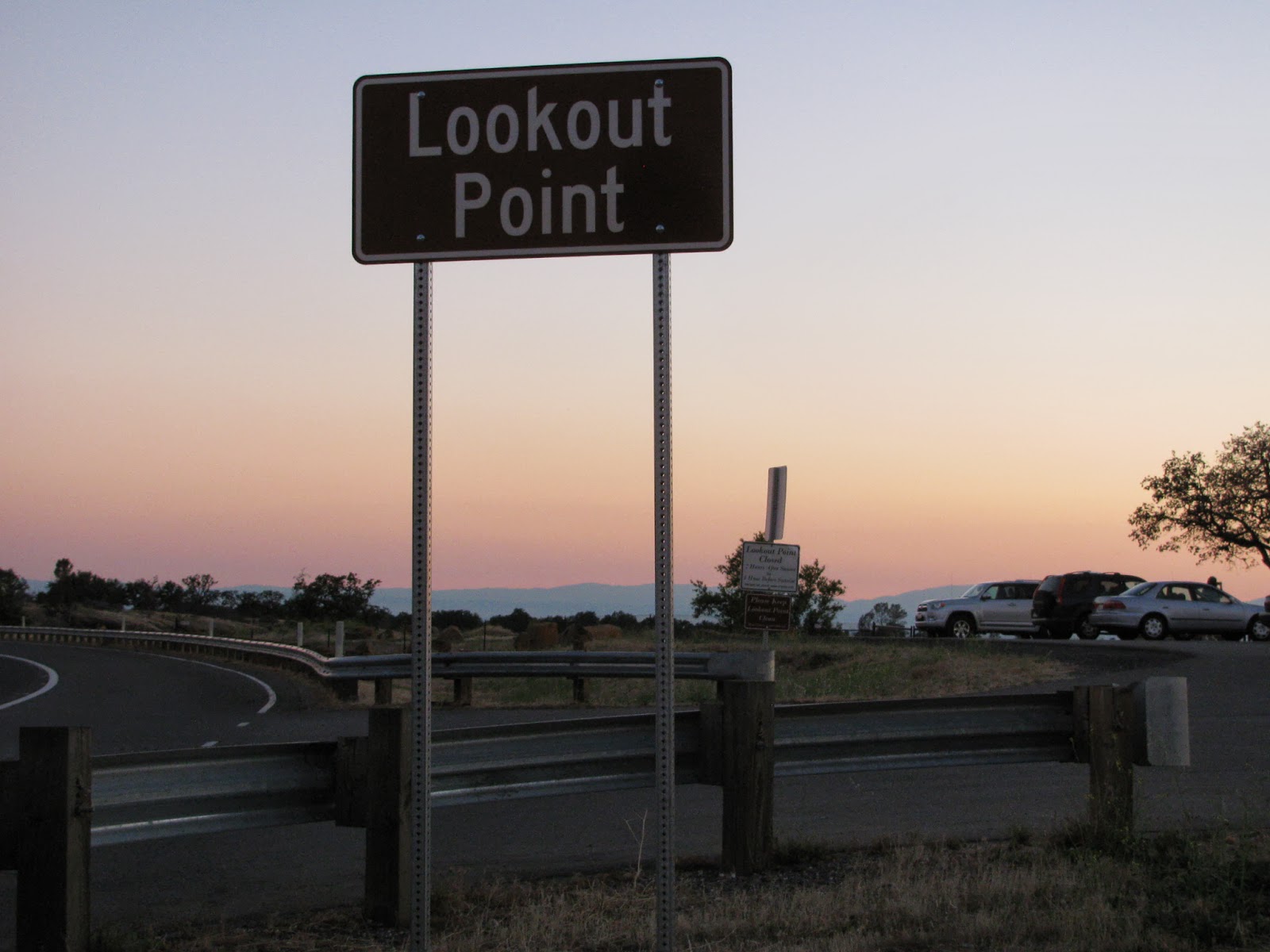
Lookout Point, Paradise, CA.

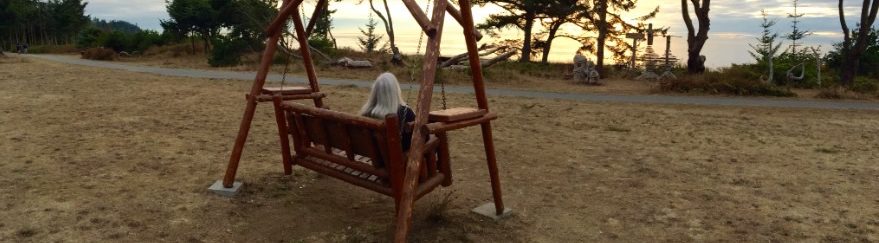
The Lookout is a place I visited for one hour each week for a year, starting with Good Friday in 2009.

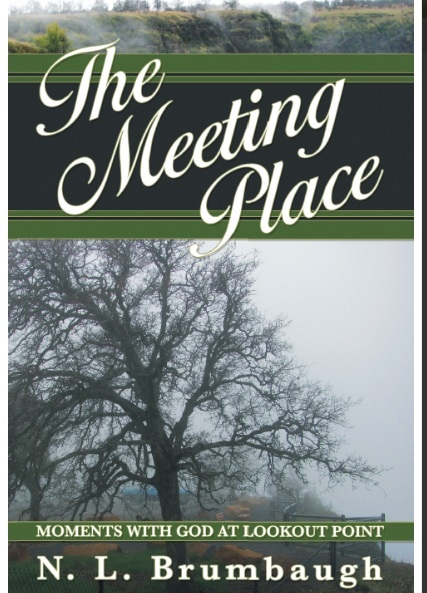
About my book: The Meeting Place: Moments with God at Lookout Point

The Meeting Place is an inspirational book, written from the heart as I grapple with sorrow and pain. I am saddened by the loss of a dear friend and dealing with an emotionally charged family situation. The book is a conversation with God, both poignant and tender.  The beauties of nature found at the Lookout figure into the meditations.
The Lookout became my place of release, its view inspiring me to contemplate and pray. There I found solace and healing. I received in a seamless blend the awe of creation knit with my belief in a loving and caring God.

INTRODUCTION: 

“A heavy shadow engulfed me, my heart was bruised. I could not escape its torment, the garment of sadness restricting my movements. I hurt. The dark night wrapped itself around me as grief invaded my being….I let my car lead me past the church through the bright city streets and onto the Skyway, a four-lane expressway leading east from the city into the foothills. In silence I drove up the hill, memories flooding my weary thoughts.

The beauty captivates me. 

I write a poem:  

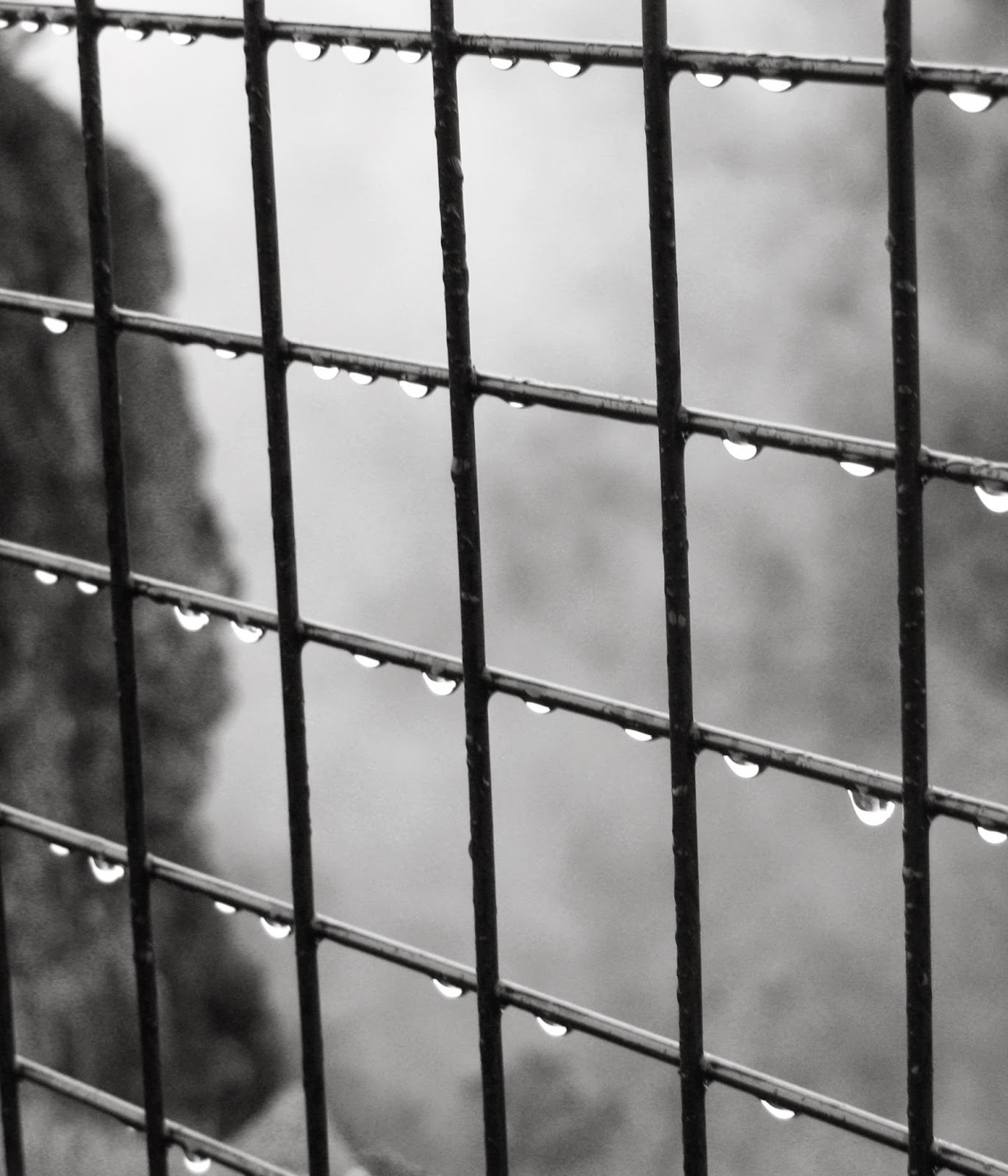
“The hawk-soaring in graceful circular patterns/Floats in seamless style/The clouds-in varied hue and shades of darkness/Black and white/Dew drops hang-on man-made fence lines/My senses feel their cool wetness/Layers upon layers of dark heavy clouds/Hiding the supreme whiteness of others/The damp drops brushing me in mist/as dark cloud hovers/Releasing its heavy load/The sun-hidden for these moments/The brightness subdued in grey screen…”

The pain surfaces

“(The concrete block) has a statement to memorialize the person they loved–someone they must have lost at this place. It makes me think of my sister, who I lost in a similarly tragic way. I feel like I am standing by her grave site in Oregon where she is laid to rest. It is a crushing feeling. I think this block with its poem is a memorial in memory of the many we have loved and lost, so fitting today with my youngest son’s friend’s memorial service. … I hurt for his family. I think of all of those who lost their lives at this place. … They met their death–and their respective families absorbed a pain of deepest chill. Life goes on, but life is never the same. I think of all the people who have loved and lost–the empty arms, the broken hearts, and the sleepless nights, like the sun that is leaving me, descending with a pink intensity tonight. My heart sighs for the gargantuan losses. Some aches are never assuaged, never satisfied, never, never, never. … Sometimes when we lose someone, life is not and cannot ever be the same. It is because no one can take their place, fill their shoes, or make the world a better place as they did.

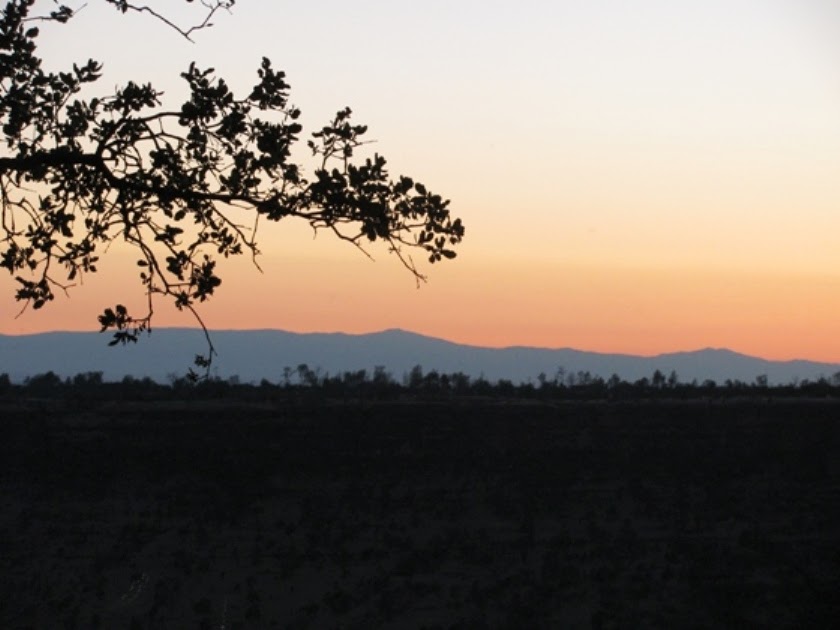
I find comfort in nature: “The shadows lengthen, proof of the earth’s rotation. The leaves on the oaks are lifting and swaying like whispers in force in a dream. It is cold, and I am wearing a jacket now. I see the Sutter Buttes mountain range in vivid blue outline. There are scattered lacy white clouds in contrast to the blue sky. The sun is getting ready to retreat behind clouds and western (coastal) mountain range. Amazing.”
 I talk with God to seek His comfort: 

Consolation: 

“I am here, dear God, to seek you, to listen. I love you–I love what I see. What do you have for me today?

Below there is a Y in the road. It is your life. Over and over again, there are hard choices, times of trouble, times of wondering, times of waiting, but they all lead somewhere. It is your business to rely on me, to grasp my intentions.

I did not think that was possible.

It is, most assuredly is. I lead slowly and act on faith and prayers, the prayers of the faithful, your prayers, my beloveds’ prayer, prayers of the humble, the righteous, the unsure, the weak, the afraid, the believing…” 

   Things of nature bring rich contemplations: 

“I drove past a field of mustard out in yellow bloom. I thought of the biblical saying, ‘The faith of a mustard seed can move mountains.’ I have always thought about that as the ultimate in faith–and that we don’t have adequate or strong faith. This time I thought a new thought. What in a mustard seed has or shows faith? What is in the mustard seed’s life, in its cycle, that should grab our attention?…The seed is dead, but there is life in the seed.


 Life comes in as I reflect on reality:  

“Sometimes I feel weak, I feel damaged by life….But it need not defeat us. More and more I am becoming convinced that God wants me, wants us, to live in ‘love’ in every situation. Loving those who have hurt us is especially difficult. It is unnatural, but then again, maybe it is love that is natural, and we’ve learned to be unloving, selfish, and independent. I believe that with God when we love others we essentially are demonstrating to the world that we love Him. In this we find an amazing concept, the more we love God the more we will have capacity to love others. 

The reflections continue: 

“I saw the new year in as always, two candles were lit on the table and three on the piano top. Their scent filled the living room and blended softly with the comforting wood stove heat.

What will the New Year bring?

More joy, more peace, More hope, more forgiveness

More love, more healing, More freedom, less anger

More promise, less suffering. Less hunger, less sadness

What will the New Year bring? It is mine, it is yours to decide.” 

God has been good to me, meeting me with His whispers of love at my Meeting Place, Lookout Point:  

 “You are my audience of One. Make the servant into the one who serves. Make a miracle of Your grade out of my life and the lives of others. It is up to You—only You. Solitude, times with You, dear God, are precious, dear, of great value.”  Amen
 

Don’t Write Your Manifesto before Doing Your Homework

Sad to say, I didn’t know what I didn’t know.

I learned the hard way.

Here’s my story.

I did it backwards. I wrote the book and then consulted a professional to guide me with some know-how to tie up the loose ends. Not a good idea.  But you don’t know what you don’t know. How true.

I was nearing the finishing stages of my book, or so I thought, a lengthy memoir that was my story and very personal to me. I was expecting some minor changes–but not a full body re-write. My advice . . . don’t do this!  Learn the ropes before you start your book.

For a couple of years I had been following a writing studio web page. I was hoping to take one of the  classes for novice writers which were offered periodically.  As a teacher, I knew I didn’t need the beginning level classes. I wasn’t quite sure where I would fit in.  I’d never met the owner-instructor, a community college professor, or knew anyone who had taken her classes. She seemed to be on the level and I was interested in getting serious about writing. Besides, I didn’t know anyone else in the business and you have to start somewhere.  My busy schedule got in the way.

It didn’t help that I am a reserved person who holds back when I should push forward. I should and could have made it happen.

Then I came up with the brainy, though late, idea of buying a block of the writing consultant’s time. I wanted to solicit some advice and know-how in regard to the book I was writing and how to go about getting it published. I was fairly certain that my writing would stand up and my time with her would be productive, netting positive results. I knew next to nothing about the craft of book writing or the publishing world and I didn’t have any writing or author contacts. I thought my book’s concept was good and that it had the potential to find an audience and to meet a need.

I took the plunge by contacting the writing studio in an email. The owner called me. We set up a time to meet. She asked me to email her some pages from my manuscript.

The owner-consultant didn’t waste any time getting down to business. First question. “What is the message of your book?” My response was vague. Next question. “Who is your audience?” I hesitated, sorting out my thoughts. Again, my answer sounded weak, it floundered – too far off the mark. I knew it and she knew it. I commenced to tell her that I wanted my book to reach hurting people, to offer hope by giving realistic solutions for those caught in the midst of disillusioning pain, a story based on my personal experiences. I’d not thought it through in exactly the same way as she was asking, not in concrete terms anyway. Apparently, my book lacked continuity and focus. She commented on my incorrect use of interior book constructs, confusing a preface with an introduction. A sinking feeling began to settle in.  She continued on, not unkindly, in a matter-of-fact voice.

It was a rude awakening. Sometimes, honesty really stings. But it does you a big fat favor. It tells you the truth, even when you are not expecting it. I wasn’t prepared for what was coming. “Your writing is like that of an amateur,” in reference to the sample pages she had previewed, “a book publisher will spot it immediately.

“However, you make some strong statements. It has potential. The grammar usage is fair. You have a command of language. You articulate well, you won’t need beginning level instruction. … A book that is well-written will possess specific elements. An author is cognizant of the way to write a book so that its voice is active, engages the reader but doesn’t tell too much too fast. An author never insults their audience by telling their readers what to think, they don’t ‘show off’ (by inserting a barrage of high-end words requiring a dictionary), and they also refrain from the use of jargon (which can litter Christian literature).

To write a book that is taken as serious by a publisher, you must become familiar with the book writing format and then apply yourself to improving your skill at writing. Writing is a craft. Let me explain what I mean.” With the formalities aside, the writing coach began to open a door and I entered a new world. Her comments about “what good authors do” fell on fertile soil. I was an eager student although a very quiet and subdued one. It was a bit overwhelming. She went on to say that it is easier to start a new book than to re-do a poorly written manuscript. I understood what she was saying, but the wind had been knocked out of my sails.  I left the session realizing that I had approached it from the wrong angle, I’d gotten it backwards. Maybe my book was a faulty enterprise, not that good, really. I took the hint.

I abandoned my book. Just like that. It was over; one hundred-plus pages, full-size single-spaced manuscript pages, abandoned.

I slipped my manuscript into a legal sized envelope to store it away to possibly revisit another day. Writing my book had consumed a whole summer and then some, encroaching on family time and wedged into the pause between teaching years. I was out of time, school would be starting soon. I quit; now feeling discouraged and deflated. All that work, hours and hours of it. I never looked at it again. I wasn’t sure what I thought or how to react. One thing I did know, I would try again. When? I had no idea. I never looked at it again. It was a painful reality for me. I was working full time, two jobs, and still raising some of my children. The balloon was deflated. But, the desire for writing for publication still remained. I was wizened up!

I had wizened up. The instructor had been frank, telling me the truth about writing that I needed to hear. What I now knew had effectively stopped me in my tracks … and that was a good thing. You have to know what you’re doing before you do it.

My mistake had been in a misplaced, innocent belief. I made the assumption that my natural writing ability would be the most important skill necessary for writing my book (I had a lot to learn). This misconception wasn’t too surprising, though, writing had always come easy for me. I’d always loved the process of finding the right word to make a sentence sing, writing with fluidity of expression, and never allowing myself to be satisfied with a mediocre effort. Many times in high school and into my college years I depended on my ability to weave words in a smooth fashion. I’d aced some pretty heavy exams by employing this gift, once writing answers to essay questions for a six hour State Teacher’s Exam in which I didn’t have the slightest idea as to the right answers to the narrow questions.

That didn’t stop me. I responded in a plausible fashion with general information related to the subject, writing well enough to convince the examiners that I knew what I was talking about. It worked. I scored well on the essay section. For church and other venues, I often contributed my skill at writing. Somehow, I had mistaken my past experiences to carry over as a slam dunk or close to it. In fact, the three people who read my manuscript had found it interesting and worthy. I was in a state of mild shock. I hadn’t expected to be so far off the mark. The constructive criticism was exactly what I had paid for, but the thought of rewriting the book was staggering.

The writing consultant, in her honesty, did me a great favor. A poorly written book containing flaws in its structure would have imploded my book’s marketability. My voice would have been silenced, and my message, which was dear to my heart, would have been lost.

Instead of continuing the book, I let it go. A few years later I decided to write an entirely different book, still non-fiction but written with a greater understanding on how to craft my writing. I never returned for another session with the writing coach even though I had intended to do so, paying in advance for more of her time. I couldn’t face it right then. Initially, it shook my confidence, I had taken it the wrong way, you’re not any good, instead of the right way, you need to work at this. When the new story presented itself to me, I found that my memory of her professional comments were still active in my mind, a resource alive inside of me, that, plus a book I purchased from her that she had compiled, describing mistakes an amateur writer makes — things I would avoid as I put pen to paper. Both contributed as resources to help me move forward, getting it right this time.

I was off and running.

…..

In a follow-up blog I will share some critical aspects of writing which I learned from the writing coach in our two sessions together. I will explain how her comments have shaped my writing. Also, it will afford an opportunity to give her the credit she is due.

About the original book?  I still want to re-write it. It may well be the most important book I ever pen. It is the story of the overcomer: Pain and Healing.