

Tears, Children, and Broken Hearts

0128092117THINGS happen and people get hurt. When they’re little people, the damage embeds itself into the psychological make-up of the child. I am no psychologist but I know this is true. Trauma can come in many forms: physical, emotional, deprivation, abandonment. We know it is true. Even traumas no longer remembered are active in some form. Unless. Unless there is a healing of that memory, almost a purging of the fact along with a renewing presence. Simplistically said, where the bad thing leaves something goes in its place. It is replaced with healing wholeness.

I couldn’t help but notice a young boy sobbing. I was sitting in a church pew right behind him and his mother and sister. When the singers began to sing, he began to sob. It wasn’t quiet and tidy. It was heart-wrenching sobbing, overtaking his demeanor. His mother looked at him with a quiet expression, then put her arm around him. He snuggled in tight. His sister leaned in close on the other side of the mother. Throughout the one hour service, the boy would cry every time the music played. People around them were offering tissues to the mother to give to the boy (he was about eight years old). His crying reminded me of sobs of some of my students over the years, their tears often a result of a father’s leaving the home or parents’ fighting. Little boys who may seem collected and strong really are not when it comes to family break-ups.

Sad to say, even my own children experienced some of this. They hurt when a separation robbed them of their father. It was something I could not prevent although I had tried. I didn’t know how to help my children. My pastor encouraged me to let them be angry, allow them to voice their hurt and sadness rather than to silence them; to validate their expressions and struggles; and, to tell them the truth when it was asked of me. Our once quiet home became somewhat agitated for the space of a couple of years. My youngest son seemed as if the light went out, his impish smile had disappeared. He looked like the dog in the picture (his dog). So utterly sad.  It wasn’t easy for me or for my children. People get hurt. All of us hurt in my family. It is silly to think that people aren’t impacted by major events that disrupt their lives. We all are psychologically affected by events that wreak havoc to our center of reference. It may take months or years to make sense of our hurt before we can initiate a path toward healing and restoration of our emotional health. It is wise and freeing to seek healing rather than to ignore or bury the feelings.

How do we heal? As a Christian, I can only speak from what I know and have experienced which has a spiritual dimension to it. I received healing from God when I sought it with my whole heart. Part of my healing came as the result of one specific time alone with God when he healed a memory from my past. Other parts of my healing have come in small increments. Some is still in the future. We are not all alike. I know of no magic cure-all. I do know that God often uses Bible verses as a way He speaks to people to help them deal with their wounds from the past. He brings a verse to mind that brings comfort to the individual.  I will mention one method, the Theophostic approach to spiritual healing. It offers help where there has been emotional wounding incurred from sexual, physical, or emotional abuse. Its method is similar to what I experienced, which is why I believe in its validity and potential to help Christians who are suffering.

Theophostic ministry is a method that uses prayer to identify the hurt, and prayer to release the hurt. The person being prayed for is not told what to think during the prayer session. It is God who does the revealing and the healing. The counselee’s thoughts and prayers are directly in line with those of the minister’s or therapist’s prayers. God is the One bringing forth the understanding and healing. A support group of praying people is part of the dynamic and is also why this is a powerful tool for healing.

It is something to consider. I cannot make any promises as to its end result.

The little boy who was crying was receiving comfort from his mother. That is a good start. We must care, and we must validate another person’s feelings. To tell some one to shut up or stuff it, is to silence something that needs to be released. Of course, I am not talking about attentional crying. There are people we rub shoulders with every day that are crying alone. There are teenagers who turn off the light and listen to music in a mindless state every night because the depression and depressive thoughts have blotted out the light of life. I personally know of teenagers who are living this way right now. I wonder if their parents know? It may even be someone we least expect, who later tells us that they were suicidal, and we were clueless at the time. That has happened to me as well.  Your teen’s overt reactions may speak of deeper issues that should be addressed. People hurt and we must help them.

Be sensitive. Offer a listening ear. Turn off the T.V.. Ask an innocent question. Engage the person in dialogue. Seek solutions. Find a counselor who clicks. Be proactive. Most of all, be kind. Be kind. Be kind. Be kind.
On a Spiritual Quest: Holy Week Reflection

image(1)It is a week of quiet commemoration for those who hold the truths of Holy Scripture dear. I see in myself a growing, longing, desiring, of sacred things that speak of God. Of all the stories found in time and eternity, the story of redemption through Jesus Christ tops them all. I have grown to adore Jesus Christ. He is the fulfillment of all that a person could want in another person and all that a person could want in a God. The God-Man was just that, human enough to understand the frailty of man, human enough to make it real to us, God enough to provide the perfect sacrifice, God enough to bring the human into a right relationship with God.

A confession: When I wrote my book, I was recovering from a lost relationship in which I had caused pain and also had received pain. It was a thoughtful time for me, one of sorrow and sadness. Understanding pain was nothing new for me. But this time I felt a piercing deep in my spirit. Confusion in the relationship centered on our Christian beliefs, strangely enough, which we both held with high regard. He was active in a liturgical church, I was active in a protestant church. Doubts had cluttered my ability to think clearly. I was afraid of our differences, letting fear become my undoing. I couldn’t quite make the leap, to embrace what was foreign to me–although it was never asked of me to do so. After the breakup, I found myself still curious. I had tasted just enough of the liturgical forms of worship to want to know more.  I began reading beyond the scope of my background. A door had opened that I could not shut. The more I read, the more I wanted. I was thirsty. I found much richness in that of which I read. Those people of faith, saints and martyrs, loved and adored the same God that I love and adore. Reading their thoughts was like eating a rich dessert, the delightful and delicate part of the meal.

A positive result: In the end, my viewpoint altered. I had been afraid of something I did not understand. Assumptions had been made by me that were not true. My thoughts were purified and enlightened. The more I sought to know, the more I came to know. I found I could fellowship with people of the faith with whom I differed in some areas. What united me to them was our beliefs concerning God the Father, God the Son, and God the Holy Spirit, and the plan of salvation for humankind. It is Christ who frees us from our bondage and enslavement. He sets us  free to live full lives of love,  grace, and truth.

Because it is Holy Week, and because I am going to church services that commemorate Christ’s Last Supper, death, and resurrection, I want to do my part in sharing some of what I have learned. I would encourage you to visit another church than your own sometime this week. You may find that God will speak to your soul in a new way. That’s a good thing. Don’t be afraid of it. Ask God to speak to you. That is what I used to do before I developed an appreciation for another form of worship. To end this writing, I want to share with you text from my book that touches on the subject of this blog. I want to draw you to the Savior, the Lamb of God who came to pardon our sins and offer us a new identity. His identity. Open your eyes to see, your ears to hear, your heart to love, and your mind to truth.

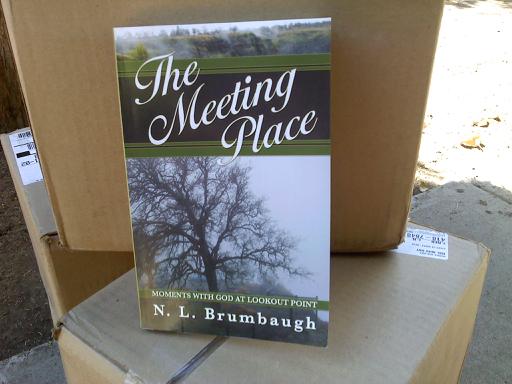
my bookTHE MEETING PLACE: Book quotes are from pages 181-184

“I found myself on a spiritual quest, seeking a new direction, searching for truth and understanding beyond my strongly held Protestant beliefs and scriptural interpretation of bible doctrines. I began to read some of the saints and mystics from the Middle Ages and more recent writers of Christian thought from the early and mid-1900s including several women from the 1800s and 1900s; Protestant, Anglican, and Catholic in breadth. A hunger grew in me for more of God in personal unity of “relationship.” I began to read life stories and expressions written by people who knew God, not just about God. I could identify with many of these various writers, their words ringing true in my thinking. Some of what they recorded I could have written; the tone was the same with a warmth of expression one finds in the writings of people who love God. Their words addressed what had been closed and unmined prior to my exposure to their vibrancy. One can find the heart of the person by what they say or the affective filter of their collective works. I no longer was looking so much at their theological positions but more at their statements regarding God and his influence, his outworking in their lives. As a result of this, my quest of which I am still on, my outlook changed immensely even though my interpretation of scripture remained much the same. I began to see with new eyes. This was a powerful gift God gave me during this period of dryness in my spiritual life, my “dark night of the soul.” In addition to my walk with God, this has particularly and significantly contributed to the inward changes in my person. I will never be the same, and that’s an understatement. It has fundamentally altered me in how I think and how I approach the Christian faith and also the family of believers. I have become less rigid and more kind, less certain but more open, less opinionated and more loving. It is a spiritual journey outside the box of religious convention and limited parameters, yet not one of compromise or the forsaking of biblical truth. My belief in the fundamentals of the faith and personal salvation through Jesus Christ remain firmly in place. More of God and less of me. Praise the Lord.

“However, the problem still remained. It has never been easy for me to accept change or address friction in personal interactions, or to “let go” when their time has ended. While I traveled this darkened spiritual path, most every waking moment I experienced a constant troubling in my thoughts and spirit, like something unsettled and not quite right, out of focus and gray. As much as I tried, I could not remove its thorn from my heart nor find inner peace. Because of its persistence and presence, it was difficult to deal with the many responsibilities on my plate. The sorrow and the aloneness were strong, taking with them my energy and free spirit. My months of visits at the meeting place helped resolve some of its pain, but nothing could completely remove its sorrow. Slowly over time, I regained my footing with God and returned to my “sweet place” of receiving grace and love from his abundant mercy. One morning a year or so later, while I was getting ready for church, I sensed God’s voice telling me what the real trouble had been, my part in the problem. It seemed as if God was explaining to me that when I had voiced my concerns by stating my doubts, they originated in my uncertainty and need for security, and in the doing of it, I had failed to trust him when I could not see the way. I had failed the test.  . . .

“I have learned much though in my search for understanding and truth. People of many denominations and religious affiliations worship the same God—in spirit and in truth. Only God knows an individual’s true heart and in whom or what they base their faith. It is belief in Christ where one finds truth; it is the one uniting truth that crosses religious boundaries or constraints and brings the universal church of God together in harmony and freedom. One can keep their biblical stance and interpretation, religious formalities, beliefs, and doctrinal positions—without compromise and still have the capacity to extend love, grace, and acceptance to sisters and brothers across the aisle, who have this same love of God in their hearts, who believe in Christ as Lord and Savior. But there’s the rub; we don’t always know who does and who doesn’t have genuine faith. Be loving anyway. How freeing this is to know and believe that God calls us to be faithful to the vision, the central truth of Christ’s Life, which he has given to each one of us as his children.”

GOD BLESS YOU,

Norma