
The church needs to wake up! We have our heads buried in the sand. Christians, did you know that nearly a third of Americans under the age of thirty have no religious affiliation? This is the highest ever, according to Hemant Mehta’s blog, Friendly Atheist @patheos.com and his book, The Young Atheist’s Survival Guide. People are rejecting God, faith, and Christianity in droves. A few internet searches easily confirm this.
The church has become irrelevant and weak, and we don’t even realize it. If it has happened in your family, it can be quite painful. Yet we must pay attention. We can’t bury our heads in the sand. This isn’t a talking point, it is an unfortunate reality, at least in some ways.
I am in serious thought these days due to the changing scene of religion in the world. Catholic and Protestant churches are being divided in thought because of the changing moral compass of society through the acceptance or rejection of changing lifestyles and its drift toward social acceptance and cultural norms. Anger is everywhere. I would be scared if it were not for my trust in God. It is not just an unbelief and rejection of Christian principles, there is a new venom and a repudiation of Christian thought.
I have been reading blogs and their blog comments written by Christian believers, newspaper reporters and by former Christians–the new atheists. It is an affront to read the anger and attacks–from both sides. In the church, views concerning biblical interpretation of morality are the dividing ground. In essence, it is effectively pulling the church apart. Other blogs are written by former believers, former Christian home-schooled, preachers, theologically schooled and so forth, who feel they were victimized by what they now consider “abusive” teachings in the church, who say they were brainwashed. They are glad for their freedom from religion and are celebrating their new life apart from its influence. Most believe they have found a better way, the true way.
The bitterness and resentment found in the new atheists’ words is what particularly saddens and concerns me. There has to be a reason for that. It is as if they must attack back and then try to turn others away from religious “foolishness” and “wrong thinking” and “lies” that they believed hurt or misguided them. It is more than disillusionment with God or the church. Their writings contain many arguments about (perceived) inaccuracies in the Bible and some of its harsh teachings. I have to say, if we are really honest with ourselves, some of these same things bother us even as Christians. The way the unbelieving present their objections and arguments seem valid and display intelligent rationale. Many are well reasoned.
It is obvious to me that in rejecting Christianity, with many leaving their religious roots, these same people have become activists against it. Why? Why such deep-seated anger? Why the many arguments to take it down, to influence others against it? Why can’t they leave it alone and say, to each his own? Even more disconcerting (but of great importance), why has Christianity left such a bad set of feelings that these people feel wounded and scarred by its dogma, practices, and teachings? I have read many of these Millennials, the growing group of new atheists as in Why are Millennials leaving church? I have listened to their criticisms and watched their videos.
In a way, it is fascinating to me. Why do people do a 180 from “believing” to “unbelieving”? I can follow most of their thinking. It makes me reconsider my own arguments in defense of my spiritual beliefs. I even confess to some unhappy feelings about the falseness of religion, things I’ve determined to leave behind as much as possible.
Rather than feeling angry, ugly, or even betrayed, I feel something quite different. I am saddened, surprised, and wondering. Why do they believe Christians are nincompoops? It makes me evaluate my faith, its realness. Is it based in both faith and reason? Were great intellects like Lewis, Merton, Chesterton, and Augustine, right and clear thinking or were they way off base and deceived in their conclusions? I don’t think so. They have a lot to say that is worth paying attention to. They make the Christian argument speak. However, what is it that makes me, like them, believe with my whole heart that God is real and relatable? (To be honest, God is as real to me as is my family) What makes a martyr willing to suffer or die for their Christian beliefs? These are good questions that we should consider.
Truly, we must know why we believe what we believe, trust what we trust, and value what we value. The other thing is, if God is not personal, then it’s not going to work very well in the long run for any of us.
These considerations have intrigued me ever since I listened to an atheist who spoke to a local group of skeptics in my hometown: Freedom from Religion Foundation, Dan Barker. He said that after he left the faith, stopped preaching the Christian gospel (he was an evangelical evangelist), when he had distanced himself from what he once believed as true, he felt free, and freedom from what he now considers a false belief. I found him interesting and his doubts logical. He made me think. He is now an active voice for the skeptics, atheists, and Nones of today. He makes Christians look/seem silly (that part isn’t so comfortable for me).
I do hear what the non-faithed are saying. They do not see anything in the church or Christianity that resonates with them. I can see why. They see the church as out-of-touch with the modern world, hypocritical, and lacking in genuine caring. Their belief is in something else, concrete and measurable, a known, like science, as the foundation for their world view. From what I can tell, to them the god that I believe in is seen as cruel, unjust, and irrelevant. Some are of the opinion that Christians always lose when they debate these issues (read Hermant Mehta, an atheist and activist).
I believe Christ would be a source of conflicted views if he were to walk on earth today. He would expose the church of its duplicity and mediocrity. He would cause people to sit up and take notice. I believe the skeptics would be drawn to His unaffected way of living life.
I make no apology for my faith in Christ, but I do dislike arrogance found in the church. Christian people who live like Mother Teresa did are the ones who are authentic. She was the real deal. More Christians need to follow her example, let go of the self, and live lives that are the hands and feet of Jesus. Maybe then the Millennials and those who doubt the validity of the Christian message would see something worth at least considering in the claims of Christ and His followers.
I wish I could remove all the anger and the misconceptions that fuel social bashing in the name of religion, and belief, and non-belief, but I can’t. All I can do is to choose to be loving anyway.
It all comes down to belief and how we reason our belief. Even “belief” is a term that seems suspect. It can be reasoned away. I guess that is why faith is needed for there to be a presence of “heart” belief. And, I also understand why wanting something “real” makes sense. Why would we want to waste our time on something invalid? I wouldn’t. For the church to keep its saltiness and its light, it must take a harder look at how it lives out its Christianity. If it is only about form rather than substance it will continue to lack in relevancy to a growing group of people. And I mean that. I’ve a feeling we’re not in Kansas any more.
Truly, there is nothing new under the sun. Doubt is where most arguments originate. Many center around doubting the goodness of God (like in the garden). Disbelief follows quite handily. Here is something to think about.
THOMAS: “Unless I see Him for myself and touch the nail prints in His hands and the wound in His side, I will not believe. . . . .
JESUS: “Look at Me. Touch My hands and My side. Stop doubting and believe!”
THOMAS: “My Lord and my God!”
JESUS: “Thomas, because you have seen Me, you have believed. Blessed are those who have not seen Me and yet believe!”
I think it is time for a new type of Christian. We need to become Christians who live and talk in direct response to the voice of Christ expressing His presence in and through our lives. We could be known as the “New Christian,” the “Haves,” and the “Sures.” The part I like, and it is somewhat to be accentuated in response to the atheist voice, is that we can’t continue conducting business as usual. We need to be part of a spiritual awakening that has meaning and substance—and has the power to make the world stand up and take notice. God is not silent, and He is not dead. It is time for Christians to come alive in a new way just like in the New Testament days.

 will find themselves challenged to grow deeper in their walk with God. The reader becomes aware of the need to surrender as they abandon their will (and life) to God. This devotional creates greater longing for the things of God. One cannot read its content without being changed on the inside. It is the one book, next to the Holy Bible, that has contributed the most in my spiritual life. There is always more to grasp in this book.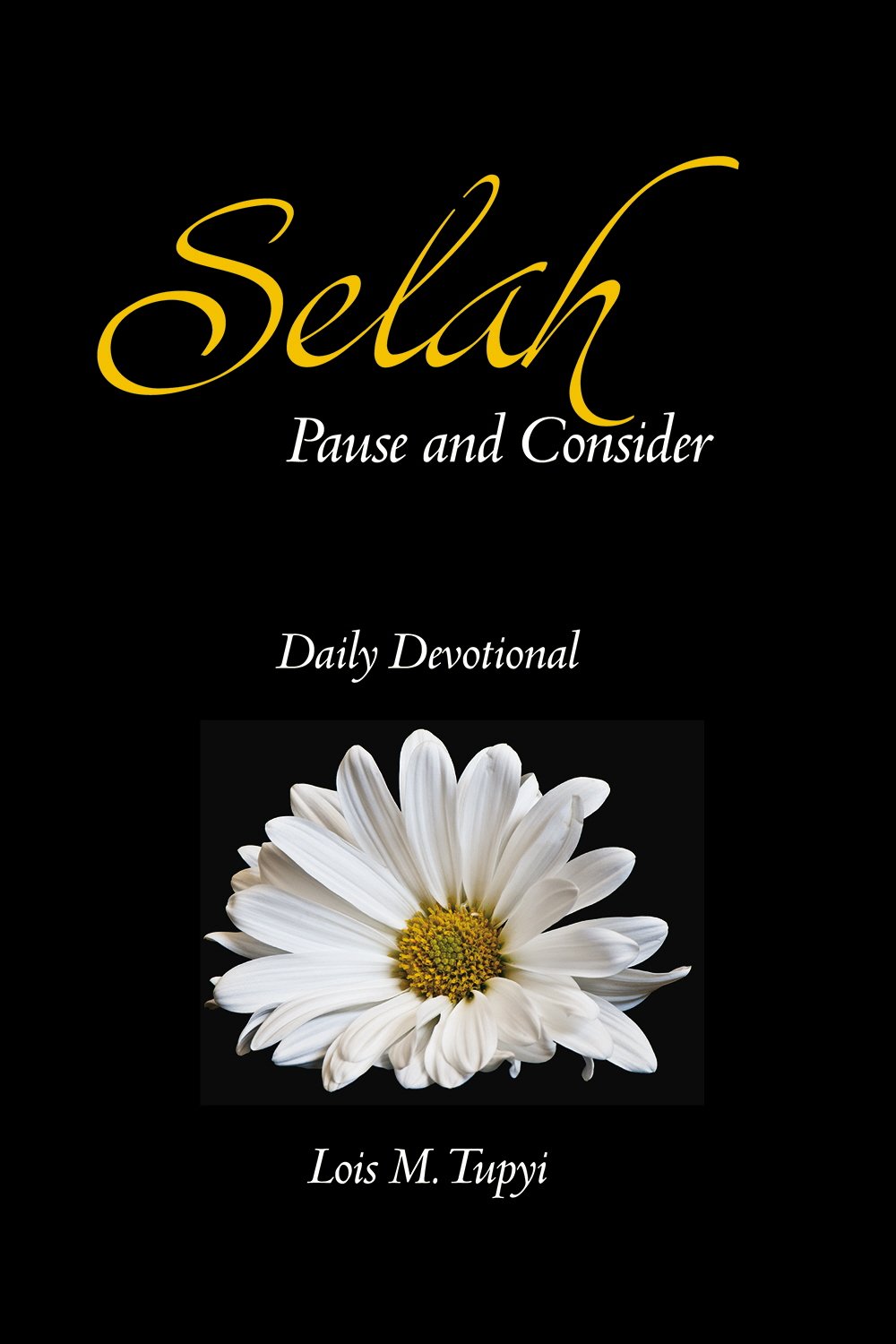
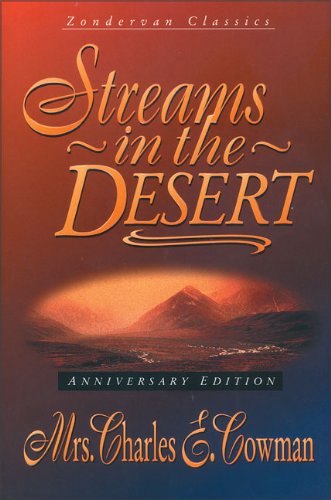
 treams in the Desert has been a devotional favorite for decades. This devotional contains a collection of writings from well-known people and publications from yesteryear. The content is one of encouragement and fortitude in the faith. It is somewhat diverse with a theme of overcoming through faith in God. This is an enjoyable devotional that helps you when you are struggling in some way.